The history of hand-cut silhouette art with scissors
Long before photography, artists were already capturing the essence of a person by cutting their profile from black paper. This form of portraiture, born in 18th-century Europe, quickly became the most accessible and elegant way to immortalise a face. With nothing but scissors and paper, an artist could capture the individuality of each person in under two minutes.
In France they were called «portraits à la silhouette», after Étienne de Silhouette, a finance minister known for his austerity. In Germany and Britain they were common in bourgeois salons. Lovers exchanged profiles as romantic keepsakes, placed in lockets and frames. They were cherished mementos, especially among families separated by distance.
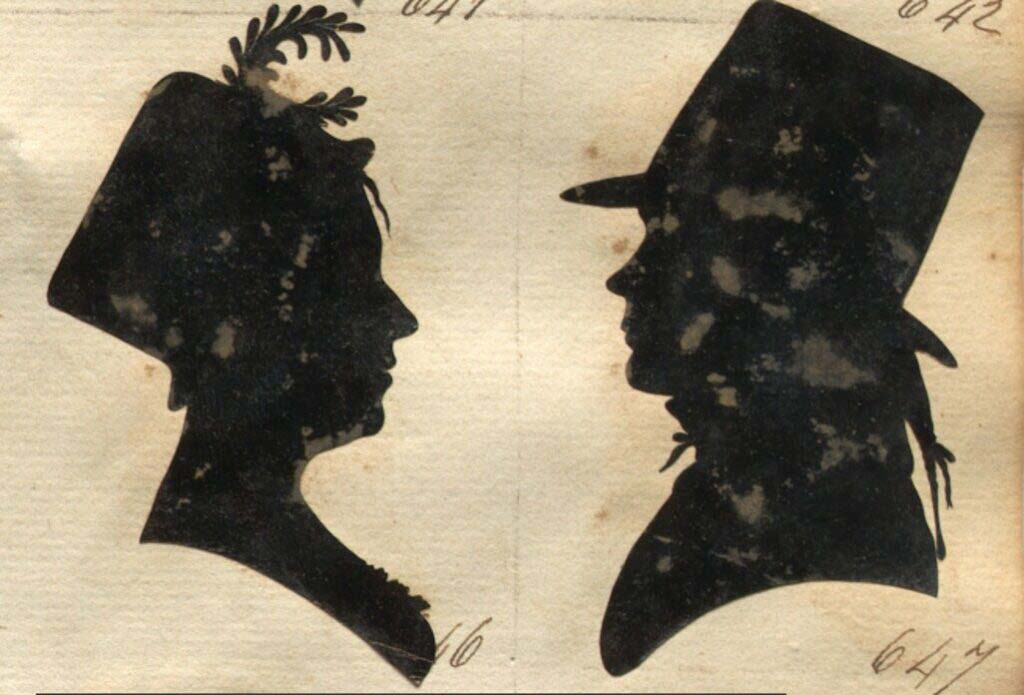
Hand-cut silhouette, 18th century — the earliest form of personal portraiture
The Golden Age: 18th and 19th centuries
Silhouette art reached its zenith as «the poor man's portrait» — the most affordable way to have one's likeness captured before the camera was invented. Travelling artists set up at fairs and markets, cutting profiles in a matter of minutes. One of the most renowned was Augustin Edouart, a Frenchman exiled in Britain whose freehand cuttings were so detailed he amassed a collection of thousands of portraits.
The Victorian era saw silhouettes explode in popularity. They became romantic symbols, decorated homes and books, and depicted scenes ranging from fairy tales to landscapes and family portraits.
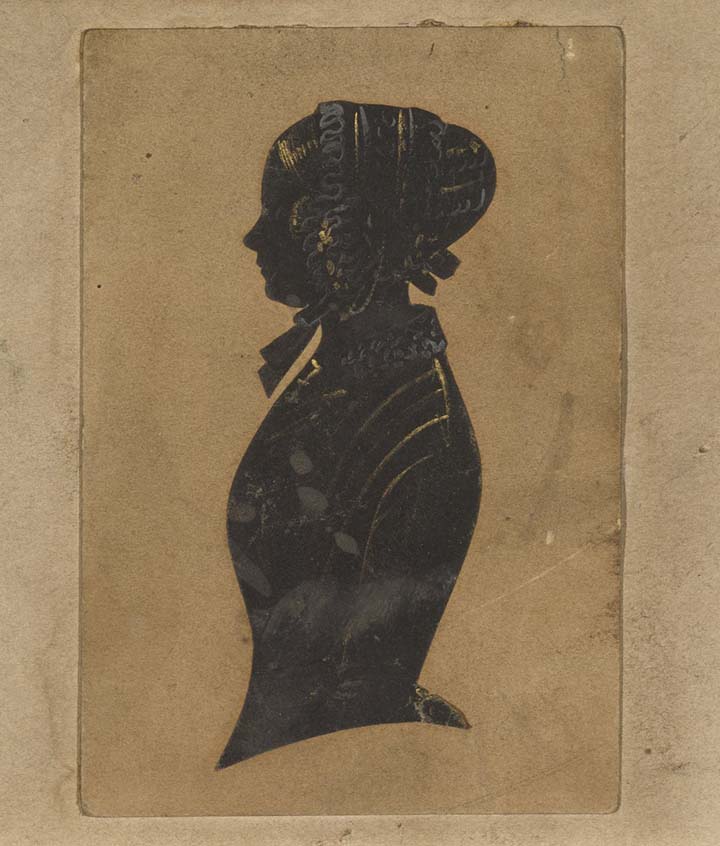
Painted silhouette with gold details, 19th century — art and elegance on paper
Silhouette art today
With the arrival of photography in the 1840s, the silhouette lost its place as the primary method of portraiture. But it never disappeared. Today, artists like Igor Kucinic keep this centuries-old tradition alive, bringing it to weddings, corporate galas, trade shows and events across Europe and the Middle East.
In a fully digital age, hand-cut silhouettes continue to captivate through their authenticity, the warmth of the human touch, and the intimate silence in which an eternal keepsake is created. Each portrait is completed in under 2 minutes — exactly as it was three centuries ago.